
Three Parallel Paths: Next-Gen Cell Conductive Solutions from the World Power Battery Conference
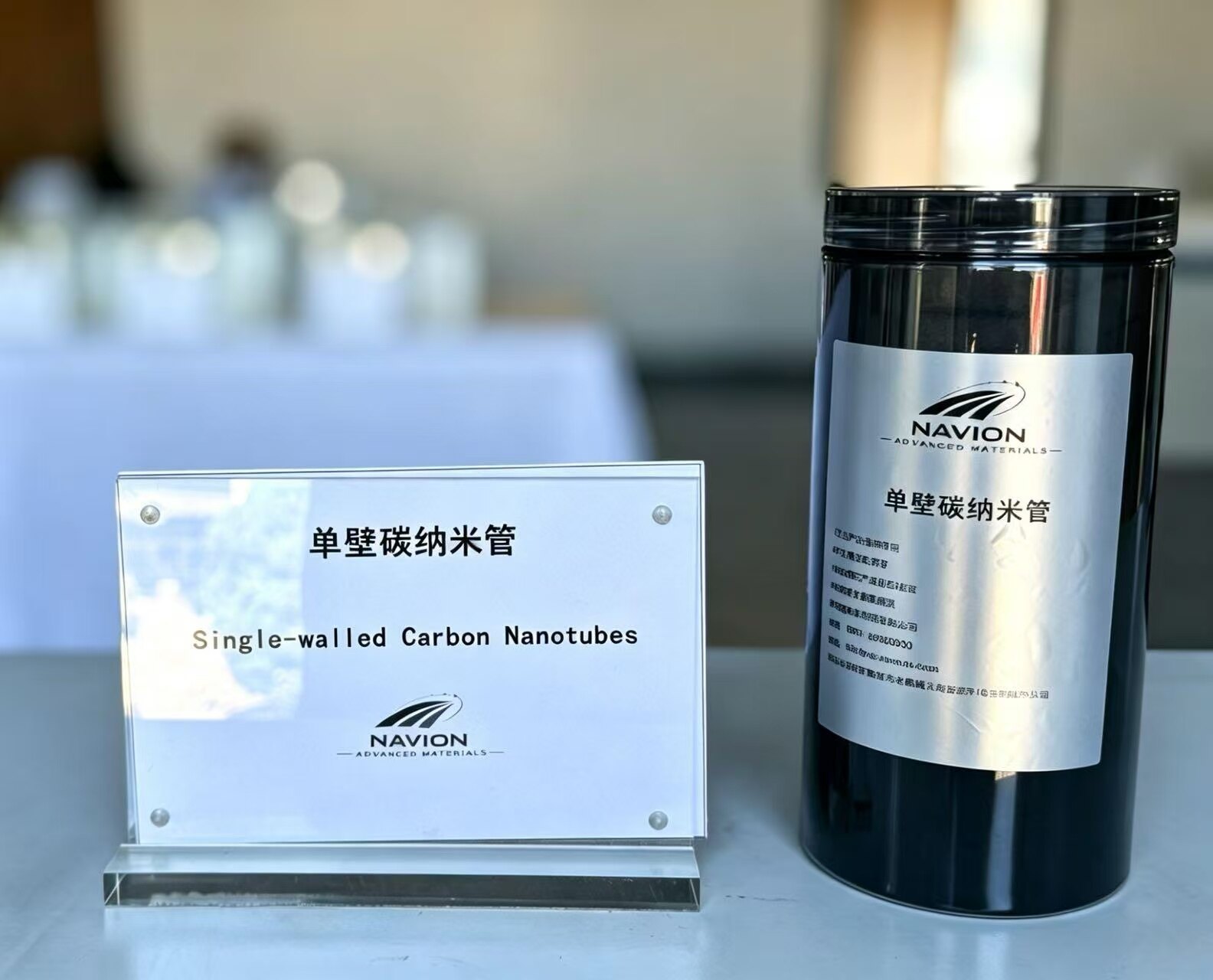
2026 World Power Battery Industry Conference released the "Power Battery Industry Development Index (2026)", analyzing power battery technology evolution across short-, medium-, and long-term horizons: In the short term, liquid lithium-ion batteries continue to iterate, with silicon-carbon anodes demanding higher stability in conductive networks. The medium term sees parallel advancement of three routes: liquid lithium-ion, sodium-ion, and semi-solid-state batteries. Long-term industrialization of all-solid-state batteries hinges on material compatibility. Across diverse battery systems, single-walled carbon nanotubes (SWCNTs) leverage their ultra-high aspect ratio to build stable conductive frameworks at low loadings, addressing R&D challenges for silicon-carbon anodes, sodium-ion, and semi-solid-state batteries. Nanhang New Materials achieves stable mass production of SWCNTs with comprehensive technical support, covering sample delivery and R&D across multiple cell systems, accelerating next-generation power battery technology upgrades.
Recently, the 2026 World Power Battery Industry Conference concluded successfully in Yibin. As the annual global summit for the power battery industry, it has long served as a barometer for industrial policy and technological direction. At the conference, the Equipment Industry Development Center of the Ministry of Industry and Information Technology officially released the "Power Battery Industry Development Index (2026)". Based on the current state of the industry, it presented three-tier technical assessments that offer strategic guidance for the sector's development over the coming years.
Short-term: Liquid lithium-ion batteries remain dominant, with continuous iteration and upgrades.
In the short term, liquid lithium-ion batteries remain the mainstay of the power battery market. The industry continues to advance toward higher energy density and high-voltage fast charging. As technologies like silicon-carbon anodes reach commercialization, there is a growing demand for greater stability in conductive networks.
Silicon-based materials undergo significant volume expansion during charge-discharge cycles, often fracturing traditional conductive networks. Single-walled carbon nanotubes (SWCNTs), with their ultra-high aspect ratio and flexible structure, form an elastic conductive scaffold at minimal loading levels, offering a strategic reference for selecting conductive materials in silicon-carbon anodes and ultrafast-charging cell development.
Mid-term: Three parallel roadmaps accelerate commercialization of multiple battery types
The mid-term outlook features a parallel development of liquid lithium-ion, sodium-ion, and semi-solid-state batteries. Sodium-ion batteries are expected to replace traditional lithium-ion batteries in cost-sensitive applications. If fully commercialized, semi-solid-state batteries could become the upgrade solution for mid-to-high-end vehicles. Sodium-ion Batteries: Due to weak intrinsic conductivity at both electrodes, multi-walled carbon nanotubes (MWCNTs) are widely used in mass production. In high-rate and low-temperature R&D scenarios for advanced sodium-ion cells, single-walled carbon nanotubes (SWCNTs) can establish more efficient electrode conduction pathways, providing material insights for cell sample development.

Solid-state batteries: High solid-solid interfacial impedance is the core bottleneck for commercialization. Traditional conductive additives struggle to achieve low-loading, long-range conductivity. Leveraging 1D nanostructure characteristics, single-walled carbon nanotubes (SWCNTs) can form a continuous conductive network at low loadings, offering a viable R&D direction to address electrode and interface transport challenges.
Long-term: Solid-state batteries hinge on material compatibility
A long-term perspective on the mass adoption of all-solid-state batteries hinges on cost control across the entire supply chain. The solid-state architecture will demand stricter performance from conductive materials, specifically regarding interface compatibility and long-range conductivity at low loadings. High-performance carbon nanomaterials will therefore become a key R&D option.
Conclusion: Material Innovation Drives Battery Industry Iteration From short-term liquid lithium-ion performance upgrades and mid-term parallel development across multiple technology routes to the long-term industrialization of all-solid-state batteries, the power battery industry has entered a new stage of multi-path collaborative development. Different battery systems possess unique technical characteristics and iteration directions, driving continuous upgrades in the comprehensive performance requirements for conductive materials.
Nanhang New Materials' single-walled carbon nanotubes leverage stable mass production capabilities and comprehensive technical support to meet R&D and sampling needs across liquid lithium-ion, sodium-ion, and semi-solid-state battery systems. Our high-performance materials empower iterative advancements at every stage of battery technology development, helping customers secure a strategic position in the next-generation power battery market.